Fifteen years ago today I arrived in the UK with a couple of suitcases, a little bit of money, and huge hopes for love, adventure, and prosperity - well, of a sort, anyway. The next morning, when my then wife-to-be left our tiny apartment in Vauxhall for work, I switched on the radio to survey the audio landscape of my new home before venturing out into the real world to try to shake off my jet lag. And out came this, the first song I heard on commercial radio in the UK. It's by no means my favorite from Supergrass, but still every time I hear it, I find myself right back in the feeling of that moment.
And the song is probably also emblematic of the general sense of optimism percolating through that era: the rise of "Britpop;" the promise of New Labour; "Cool Britannia;" the approaching Millennium; new technological and economic paradigms; previously unknown prosperity - much of which optimism, we now know, was underpinned by poor planning, poor regulation, and a lack of prudence and foresight which has led us to the nightmare, sorry, "significant challenges and opportunities," which now confront us. Still, on July 7, 1995, it was all there to play for, and I relish the memory.
Wednesday, 7 July 2010

Saturday, 19 June 2010
Let's go away for a while
I'm a sucker for the stories behind how great records were made, and "Pet Sounds" is certainly one of the greatest. Here we have Brian Wilson working to realise the beautiful music in his head - a bit of a taskmaster, but it's difficult to argue with the results.
Wednesday, 9 June 2010

Inspirational
The other night I watched "This is Spinal Tap" for the first time in many years, and I laughed just as hard and long as every other time I have ever watched it. As anyone with taste will surely agree, the best member of the band, without question, was Nigel Tufnel, whose scenes in his guitar room are among the funniest in the film. Today I happened to notice something come up on Twitter with a link to an article containing this footage. If this priceless segment were not the actual source for many of the guitar room gags, I will eat my skeleton T-shirt. Otherwise, it's one helluva coincidence.
Saturday, 15 May 2010
Missing
Tonight I'm missing a show at the Levitt Shell in Overton Park, Memphis, originally scheduled as a Big Star performance, but now re-purposed as a tribute to Alex Chilton. Of course I'm missing it, because I live 4,400 miles out of town, just beyond the dying gasp of Memphis' relentless eastward urban sprawl. Last night, I missed what by all accounts was a great show by my friend and occasional co-conspirator, Linda Heck, with whom I have just recently done some recording, both from London and in Memphis. This remarkable video sort of connects the two, at least in my mind.
Here we see Alex, joined by the late Jim Dickinson and Lee Baker, along with Sid Selvidge, Marcia Hare, a bass player I don't recognize, and an unseen drummer (presumably Richard Rosebrough) recording sections for "Like Flies on Sherbert," in either 1978 or 1979. This was a record I listened to with fascination for a long time, and while reviewers at the time struggled to know what to make of it, in retrospect, I think it's an important missing link on the road to the "lo-fi devolution." It's also an awful lot of fun.
If I understand it correctly, the story is that Alex managed to con some free studio time by claiming that technical problems had impeded his production of the Cramps' "Songs the Lord Taught Us," though this may be apocryphal.
This is a fascinating document to me, both of the people and of the recording process at the time. My recent Urashima Taro-like re-entry to the recording studio was an eye-opener, and this video reminds us how painful and challenging the process used to be. Witness Sid Selvidge trying with great difficulty to punch a single phrase into the beginning of "No More the Moon Shines on Lorena," and you get a sense of how difficult things were. Obviously, working within these constraints also prompted more innovative thinking, but damn, some easy things really seem unnecessarily hard in retrospective.
The songs are, "My Rival," "No More the Moon Shines on Lorena," and "Boogie Shoes." A longer version of this once existed on Vimeo, which also included more of "My Rival," "Bangkok," "Baby Doll," and "Rock Hard." Chaotic and all over too soon. Rest in peace, Alex.
Here we see Alex, joined by the late Jim Dickinson and Lee Baker, along with Sid Selvidge, Marcia Hare, a bass player I don't recognize, and an unseen drummer (presumably Richard Rosebrough) recording sections for "Like Flies on Sherbert," in either 1978 or 1979. This was a record I listened to with fascination for a long time, and while reviewers at the time struggled to know what to make of it, in retrospect, I think it's an important missing link on the road to the "lo-fi devolution." It's also an awful lot of fun.
If I understand it correctly, the story is that Alex managed to con some free studio time by claiming that technical problems had impeded his production of the Cramps' "Songs the Lord Taught Us," though this may be apocryphal.
This is a fascinating document to me, both of the people and of the recording process at the time. My recent Urashima Taro-like re-entry to the recording studio was an eye-opener, and this video reminds us how painful and challenging the process used to be. Witness Sid Selvidge trying with great difficulty to punch a single phrase into the beginning of "No More the Moon Shines on Lorena," and you get a sense of how difficult things were. Obviously, working within these constraints also prompted more innovative thinking, but damn, some easy things really seem unnecessarily hard in retrospective.
The songs are, "My Rival," "No More the Moon Shines on Lorena," and "Boogie Shoes." A longer version of this once existed on Vimeo, which also included more of "My Rival," "Bangkok," "Baby Doll," and "Rock Hard." Chaotic and all over too soon. Rest in peace, Alex.
Electricity
I think it's a safe bet that the Cannes Film Festival will not see the likes of this this year, or any other, for that matter.
Wednesday, 12 May 2010
Sunday, 2 May 2010
What turns you on, U.F.O.?
Doug Easley's studio office contains a huge number of song lyrics from songwriter hopefuls who sent them in to the previous occupant/proprietor back in the 1970s. The most outstanding and strange that I saw was called "What Turns You On, U.F.O.?" It was an expression of exasperation with a lover, apparently of a sexual nature, but only the author knows for sure. Hopefully she since has either worked it out or moved on. No real connection with this short video of the Joe's Liquors "Sputnik" sign, apart from my own oblique connection. I always loved this Memphis landmark when I lived there, but like so many things in the city, it was frozen and non-functional at the time, only coming to life after I had moved on.
I'll remember April

The burst of beautiful spring weather we've had recently has evaporated, and I find myself looking out my window on a grey and unseasonably cold London Sunday afternoon, struggling to grasp that the events of the past week were real, not imagined.
I returned Thursday morning from a four-day lightning trip to Memphis, having at last escaped the clutches of Eyjafjallajokull. There I had the indescribable delight of three days in the studio with Linda Heck and the ever-amazing Doug Easley.

I shot plenty of video on my Flip Mino, but sadly this precious device seems to have died somewhere along the way, and I can't even retrieve the videos. I do have this one short segment shot on my phone, wherein we're listening as our old band mate Kurt Ruleman adds some percussion parts to a track.
The main focus of these sessions was vocals: Linda re-cut a couple of main vocals, and I added my voice to ten tracks, on some of which Linda sang with me. We have always had a deep unspoken musical understanding, and I find that harmony ideas flow thick and fast in my mind when I hear her sing. We also have a tendency to sound alike, or more accurately, I have a tendency to sound like her when I sing with her. I am curious to see if, when this collection of songs sees the light of day, listeners will even realize it's not all her.

We also synched up the guitar parts I recorded for four songs in London, so she and Doug could hear properly for the first time what we did (as opposed to the mp3 versions I sent previously, which have a Phil Spector-esque quality to them - as in it is often hard to unpick sounds). Kurt came in to do some percussion, including playing Doug's tympanis, which used to belong to Stax.

There were some more details added here and there: Linda played some sparse pedal steel parts on "Transformed," to which I also added pedal steel (though in my case it is strummed slowly, to sound like a tanbura); Doug added some beautiful pedal steel and virtual vibes to "At Your Door"; and in the absence of our friend John McClure I punched in a sparse bass line during the breaks in the same song.
So, at this point, I'm guessing this project may be near completion, apart from the mixing, not quite two months since it was begun. Linda, John and Kurt cut 15 basic tracks and vocals at the beginning of March, I did my basement sessions later the same month, Greg Easterly and Mark Harrison added strings, sparse guitar and synth to a couple of songs in Nashville in April, and this string of vocal/percussion/overdubs sessions in Memphis takes things to a pretty complete level, at least as far as I can hear.
I am as excited about this as anything I've ever been involved with, and I love every second of the 51 minutes or so which these songs comprise. I think Linda's writing and singing is in top form, and the playing from her and Messrs. McClure/Ruleman/Spake/Duckworth/Easley/Easterly/Harrison is tasteful and fine throughout. For my own part, having put the guitar down for 15 years, I feel like I play better than I ever did when I was trying consistently. Perhaps I should not play more often.
Seriously though, it's interesting to have the perspective of time to put things into context. I used to find it daunting to go into the studio in isolation to do guitar or vocal parts, and was prone to clowning in order to hide my discomfort or lack of self-confidence. I also recall many times being in the studio with no clear idea of what we were trying to achieve - this sometimes gave rise to interesting accidents, but more often led to indifferent results.
The contrast with the past could not be greater in this project, at least as I have experienced it. For once, I have felt a sense of lucidity and calm throughout, in having ideas worked out in advance which ended up being executed as planned or improved through collaboration with others. I guess this is the much-vaunted "confidence and ease that comes with age and experience," and I can only hope it eventually permeates all other aspects of my life.
The material in question also makes a good contrast with the much-lamented "Lost Album." Whereas we either ran out of money or patience, or perhaps both, before that body of songs could be satisfactorily mixed and presented as a finished, polished product, every song here already feels like a complete, self-contained work. Every song here, bar one, has a definite ending, rather than a lazy fade. The arrangements are more sophisticated and there is much more going on sonically, but the sound is much sparser - another lesson of experience being a greater capacity to listen and self-edit. Saying nothing, or little, usually carries more weight and meaning than a filibuster.
And the nature of the songs in this set is also a long way from 1992. What are the songs about? One thing I have realized after all these years is that Linda's writing process is probably a much more complex affair than might seem apparent to anyone but her, which makes interpretation a fairly treacherous task. There are some non-obvious shifts in point-of-view which I am now aware of, and in one case I assumed a song to be about a very specific individual, only to be told that the lyrics had the widest and most general application imaginable. So, in short, it's not for me to try to interpret or explain, because I may be wrong, apart from the songs I have asked about and had explained to me. However, I do hear some common themes cutting across most of the songs involved here: emotional estrangement (both from the other and the self), death (in a variety of senses/guises), vulnerability, acceptance, forgiveness, self-discovery, rebirth. Grown-up stuff, but beautiful and a lot of fun. I am ecstatic and thankful that I got the chance to be a part of it.

Thursday, 22 April 2010
Memphis is the new Memphis
Well, Plan A was to attend and cover Fiberfete in Lafayette, and then carry on to Memphis for a short check-in with friends and family, and some recording with Linda Heck. However, Iceland had a different plan in mind, and the first leg of my journey was lamentably cancelled. However, tomorrow will hopefully allow me to realize Plan B, which constitutes the second leg of the trip in isolation. I'm desperately hoping it all comes off.
Monday, 29 March 2010
Jazz Club
The Fast Show was one of my very favorite shows, and its high point coincided with my early days in the UK. Happier times. "Jazz Club" was always one of my favorite segments, and this compilation shows why.
Back in the basement

I haven't set foot in a recording studio (at least not as a participant) since the mid-1990s, if that can be believed. Things have changed a bit. Last week I cut guitar and vocal parts for three new songs as part of the ongoing Linda Heck Memphis recording project, except that I cut my parts at "The Shop," a great local studio run by friend Paul Betts in East Dulwich, London.
Last week's titles were the atmospheric "Alabama," "How About You?" and "All Things Fall Away," and while I am thrilled to be involved and had a blast working with Paul, inside I felt forlorn, still absorbing the news of Alex Chilton's untimely death, and I think this came through in what we cut, which I'm very pleased with. I return Wednesday to cut one more, the more upbeat "Onward," which I believe requires a Marshall amp, two guitars in conflict, and a lot of coffee. Fortunately all of the above are ready and waiting.
Don't stand so close to me
A few years ago at Christmastime, I was with my wife and a group of friends at the Old Vic Theatre in London, seeing Sir Ian McKellen's Aladdin pantomime. After the very entertaining first act, there was an intermission, and the amused audience squeezed out into the lobby in a (mostly futile) attempt to get a drink before the second half began.
It was a particularly bad crush as I recall, and I became increasingly aware of an above-average source of pressure on my left side, including hints of an elbow in my ribs. As this grew worse, I began to think, "Okay, who is this asshole?" and I broke off conversation with my comrades to look. I turned my head to the left to find myself eye to eye with a man I immediately recognized as Gordon Sumner, a.k.a. Sting.
He looked incredible, I must say, in spite of his elbow - I guess that's what good genes, a lot of money, and a bit of work can do for you. I attempted to locate my mobile phone and take a clandestine photo while he was still beside me, but my wife intimated that this would be a bad idea, so I abandoned that plan. Once in the lobby, Sting, Trudy, their kids and their discreet security escort set up camp on the stairs, six feet or so above the great unwashed.
I sort of liked this strategy. It wasn't so much that they wanted to be on display, I suspect, but more an acknowledgement to all present that Family Sting were in the house, and you can look, but don't touch. Plus it was a solid defensible position should anything untoward happen. In the event, all was peaceful, though many, including me, gawked a bit in spite of ourselves. Sting didn't look all that happy to me, maybe that's part of being the King of Pain, a title I could have usurped had his elbow action continued a few seconds longer.
It was a particularly bad crush as I recall, and I became increasingly aware of an above-average source of pressure on my left side, including hints of an elbow in my ribs. As this grew worse, I began to think, "Okay, who is this asshole?" and I broke off conversation with my comrades to look. I turned my head to the left to find myself eye to eye with a man I immediately recognized as Gordon Sumner, a.k.a. Sting.
He looked incredible, I must say, in spite of his elbow - I guess that's what good genes, a lot of money, and a bit of work can do for you. I attempted to locate my mobile phone and take a clandestine photo while he was still beside me, but my wife intimated that this would be a bad idea, so I abandoned that plan. Once in the lobby, Sting, Trudy, their kids and their discreet security escort set up camp on the stairs, six feet or so above the great unwashed.
I sort of liked this strategy. It wasn't so much that they wanted to be on display, I suspect, but more an acknowledgement to all present that Family Sting were in the house, and you can look, but don't touch. Plus it was a solid defensible position should anything untoward happen. In the event, all was peaceful, though many, including me, gawked a bit in spite of ourselves. Sting didn't look all that happy to me, maybe that's part of being the King of Pain, a title I could have usurped had his elbow action continued a few seconds longer.
Thursday, 18 March 2010
A bad day for music
I awoke today to the sad news of Alex Chilton's passing. Then coming home from running the kids to school, I heard that Charlie Gillett is also gone. I'm very saddened, almost speechless. Different men, different lives, different roles, but for me their significance is closely related. Long before satellite radio and the internet, both men were stubbornly committed to sharing unknown/unusual music with the world, Charlie through his broadcasts, and Alex through his recordings and shows (obviously not to mention his own brilliant song writing). Rest in peace gentlemen. Music lovers around the world are much richer for having known you.
Gigantic, ten-gallon hat-tip to my former neighbor Robert Gordon for this video of the song "My Rival" (which later appeared on "Like Flies on Sherbert," an album which fascinated me for a long, long time), shot by William Eggleston, who once let me use his phone when my car broke down outside his house. I didn't realize until years later that he was who he was.
Gigantic, ten-gallon hat-tip to my former neighbor Robert Gordon for this video of the song "My Rival" (which later appeared on "Like Flies on Sherbert," an album which fascinated me for a long, long time), shot by William Eggleston, who once let me use his phone when my car broke down outside his house. I didn't realize until years later that he was who he was.
Monday, 15 March 2010

Offline analogue nostalgia blues
I am most probably addicted to the Web, but there is a part of me which misses the pre-Internet era when sharing music with friends involved a lot of time, effort and thought. I often made cassette compilations for old friends, new-found possible friends with a common interest, people in need of education or conversion to this or that artist/style, and women I was interested in. It was an expression of self: "This is what I think is good, you need to hear it, and I have made the effort to make this for you, to curate a collection of songs which will hopefully change your view of the world, or at least make you smile."
It was a time-consuming labor of love, often involving hand-written notes and bespoke cover art, very different from the instant gratification/commoditization of information sharing we experience online today. Not that the modern experience is entirely a bad thing, quite the opposite. Can you remember being interested in a certain topic and having to go to the local library to do research and deal with things like microfilm, microfiche, and The Readers' Guide to Periodical Literature? If you can't, count yourself lucky. It was exceedingly painful. It was a world where access to information was, comparatively, incredibly constrained, and if you didn't experience it first-hand, you really can't imagine what it was like, which was bad in retrospect, but felt positively Space Age back then. (Makes one wonder what our children will think about our fancy Interwebs of their childhood when they're our age.)
Anyway, back to music. I made many compilations for friends/possible friends/converts/possible girlfriends back in that age, and I also received many. My friend and bandmate Robert Fordyce, who moved to New York not long before I moved to London in 1995, and I were kind of fed up with "pop" music in the early/mid 90s, and so we spent a lot of time sitting around listening to modern jazz, "world" music, and 20th Century Classical music and other weird, off-road audio, and he made me four cassettes of the 20th Century masters, each with its own humorous caricature of the composer. Many years ago, my erstwhile wife took the covers and framed them. I recently was reunited with them as I unpacked upon moving into my new flat.
They are:
Igor Stravinsky, aka "Pimpin' Igor"

Bela Bartok, whose strapline is "Don't Worry, be Happy." I love it.

Charles Ives, who, as the text states, won the Pulitzer Prize for music, but declined it.

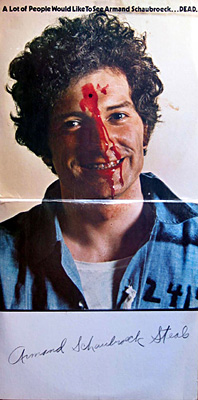
Arnold Schoenberg, my favorite of the group, and an oblique reference to the album "A Lot of People Would Like to See Armand Schaubroeck... Dead," which our friend and bandmate Jeff Green from The Grundies owned.

Thank you, Bob. I continue to treasure these drawings. They make me smile whenever I see them, so mission accomplished, still after 16 years or so.
It was a time-consuming labor of love, often involving hand-written notes and bespoke cover art, very different from the instant gratification/commoditization of information sharing we experience online today. Not that the modern experience is entirely a bad thing, quite the opposite. Can you remember being interested in a certain topic and having to go to the local library to do research and deal with things like microfilm, microfiche, and The Readers' Guide to Periodical Literature? If you can't, count yourself lucky. It was exceedingly painful. It was a world where access to information was, comparatively, incredibly constrained, and if you didn't experience it first-hand, you really can't imagine what it was like, which was bad in retrospect, but felt positively Space Age back then. (Makes one wonder what our children will think about our fancy Interwebs of their childhood when they're our age.)
Anyway, back to music. I made many compilations for friends/possible friends/converts/possible girlfriends back in that age, and I also received many. My friend and bandmate Robert Fordyce, who moved to New York not long before I moved to London in 1995, and I were kind of fed up with "pop" music in the early/mid 90s, and so we spent a lot of time sitting around listening to modern jazz, "world" music, and 20th Century Classical music and other weird, off-road audio, and he made me four cassettes of the 20th Century masters, each with its own humorous caricature of the composer. Many years ago, my erstwhile wife took the covers and framed them. I recently was reunited with them as I unpacked upon moving into my new flat.
They are:
Igor Stravinsky, aka "Pimpin' Igor"
Bela Bartok, whose strapline is "Don't Worry, be Happy." I love it.
Charles Ives, who, as the text states, won the Pulitzer Prize for music, but declined it.
Arnold Schoenberg, my favorite of the group, and an oblique reference to the album "A Lot of People Would Like to See Armand Schaubroeck... Dead," which our friend and bandmate Jeff Green from The Grundies owned.
Thank you, Bob. I continue to treasure these drawings. They make me smile whenever I see them, so mission accomplished, still after 16 years or so.
Tuesday, 9 March 2010
Scenes from London life

Detail from mural on housing estate set for demolition, Newington, South London, boyhood home of Michael Caine.
Can you keep a secret?
That darned Linda Heck has embarked on a recording project, cutting 15 tracks in Memphis last week at Easley-McCain studios with the usual suspects - fine musicians (and people) every one. Next, in perhaps a first for a Memphis-based band, sometime next week I will be stepping into a friend's studio in East Dulwich, London, to add some guitar and vocals to four tracks, maybe more. It's going to be a learning experience for everyone involved. Presumably the files from the Memphis session will be uploaded to an FTP site, which we will then pull down on this side of the pond, and then upload again once we're done. Meanwhile, listen to the new song "Woo Hoo Hoo Yeah" from this session on Linda's MySpace page. Joyous and smooth as silk. I'm all excited about this.
Monday, 8 March 2010
The Lie
A great performance by The Gun Club from 1983 at the Paradiso in Amsterdam, featuring my friend Jim Duckworth, certainly one of the planet's greatest living guitar talents. I love this song, both because of the chord sequence and the ambivalence of the lyrics: is Jeffrey Lee Pierce singing about a woman, himself, heroin, or all of the above?

Subscribe to:
Posts (Atom)


 Posts
Posts